

Lumbar Laminectomy
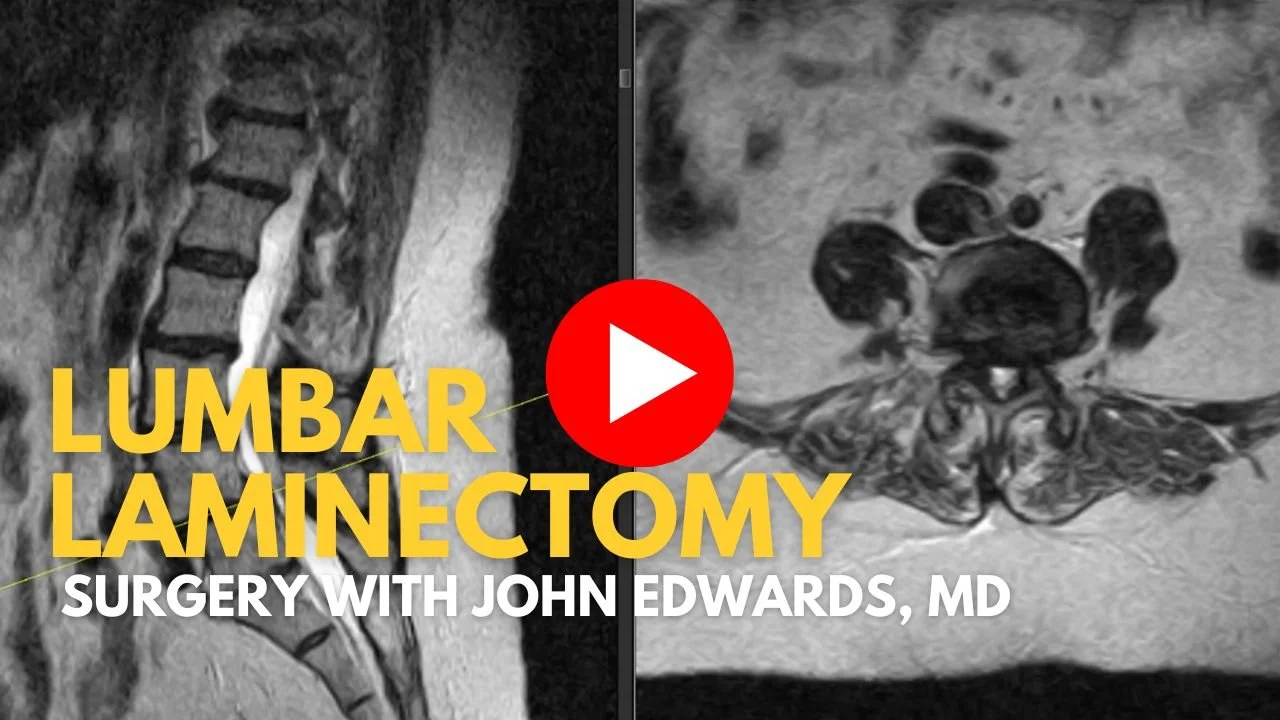
A lumbar laminectomy is one of the most common spine surgeries performed to treat spinal stenosis, a condition where arthritis and other age-related changes narrow the spinal canal and place pressure on the nerves. By creating more space around the nerves, a lumbar laminectomy can reduce leg pain, numbness, heaviness, and improve walking tolerance.
-
A lumbar laminectomy is designed to relieve pressure on the nerves in the lower back caused by spinal stenosis.
Common symptoms include:
Difficulty standing upright for long periods
Leg heaviness or fatigue when walking
Numbness or tingling in the legs
Pain that improves when sitting or bending forward
Reduced walking distance due to discomfort
The goal of surgery is to remove the arthritic tissue and bone that are narrowing the spinal canal and pinching the nerves.
-
Lumbar laminectomy is performed under general anesthesia using a minimally invasive approach.
During surgery:
A small incision, typically about 2 centimeters, is made in the lower back
A specialized retractor is placed to access the spine
A microscope is used to improve visualization and precision
The arthritic bone and tissue causing the narrowing are removed
The spinal canal is opened to relieve pressure on the nerves
The procedure typically takes less than one hour, and patients usually return home the same day.
-
Day of Surgery
Most patients go home the same day
Walking is encouraged immediately
First Few Weeks
Gradually increase activity as tolerated
Most patients notice improvement in walking and leg symptoms early in recovery
Some incisional soreness is expected
6-8 Weeks
Most patients have returned to normal daily activities
Continued improvements in mobility and endurance are common
Recovery is generally well tolerated and focused on restoring movement and function.
-
The goal of lumbar laminectomy is to improve symptoms caused by spinal stenosis and help patients return to a more active lifestyle.
Many patients experience:
Improved walking tolerance
Reduced leg pain and numbness
Less heaviness in the legs
Improved ability to stand upright
Better overall function and mobility
Most patients notice improvement relatively quickly after surgery.
-
Every surgery carries risks, though serious complications are uncommon.
During Surgery
Spinal fluid leak (approximately 2%)
Nerve injury (rare)
After Surgery
Fluid collection around the surgical site
Accumulation of blood or inflammatory fluid
Approximately 1-2% of patients may require another procedure to remove a fluid collection if symptoms return
In some cases, spinal instability is also present. When that occurs, a lumbar fusion may be recommended along with the laminectomy. Your surgeon will discuss whether both procedures are necessary based on your imaging and symptoms.
ADDITIONAL RESOURCES
-
![]()
Surgery Explained
Watch as he explains the surgical techniques used to decompress the spinal cord and restore function.
Patient Stories
Summit Stories — Esme Anderson
Esme Anderson, a nurse practitioner and Utah Valley University healthcare professional, shares her journey from experiencing debilitating falls caused by nerve impingement to finding relief through Dr. John Edwards’ expert care. After her surgery, Esme immediately felt better, with her pain and mobility issues resolved. We are grateful for providers and community members like Esme!
Summit Stories — David Henslington
For 42 years, David has played the Grubstake in Park City. He started guitar at 8 years old, performing by 12, hauling heavy gear through decades of late nights and long sets. Music has never just been a job. It has been his life. Today, he is still doing what he loves most. Walking a mile. Bending down without fear. Playing beside longtime friends. Greeting regulars who have grown up with his sound. For David, success is simple. Keep playing. Keep moving. Keep the music going.