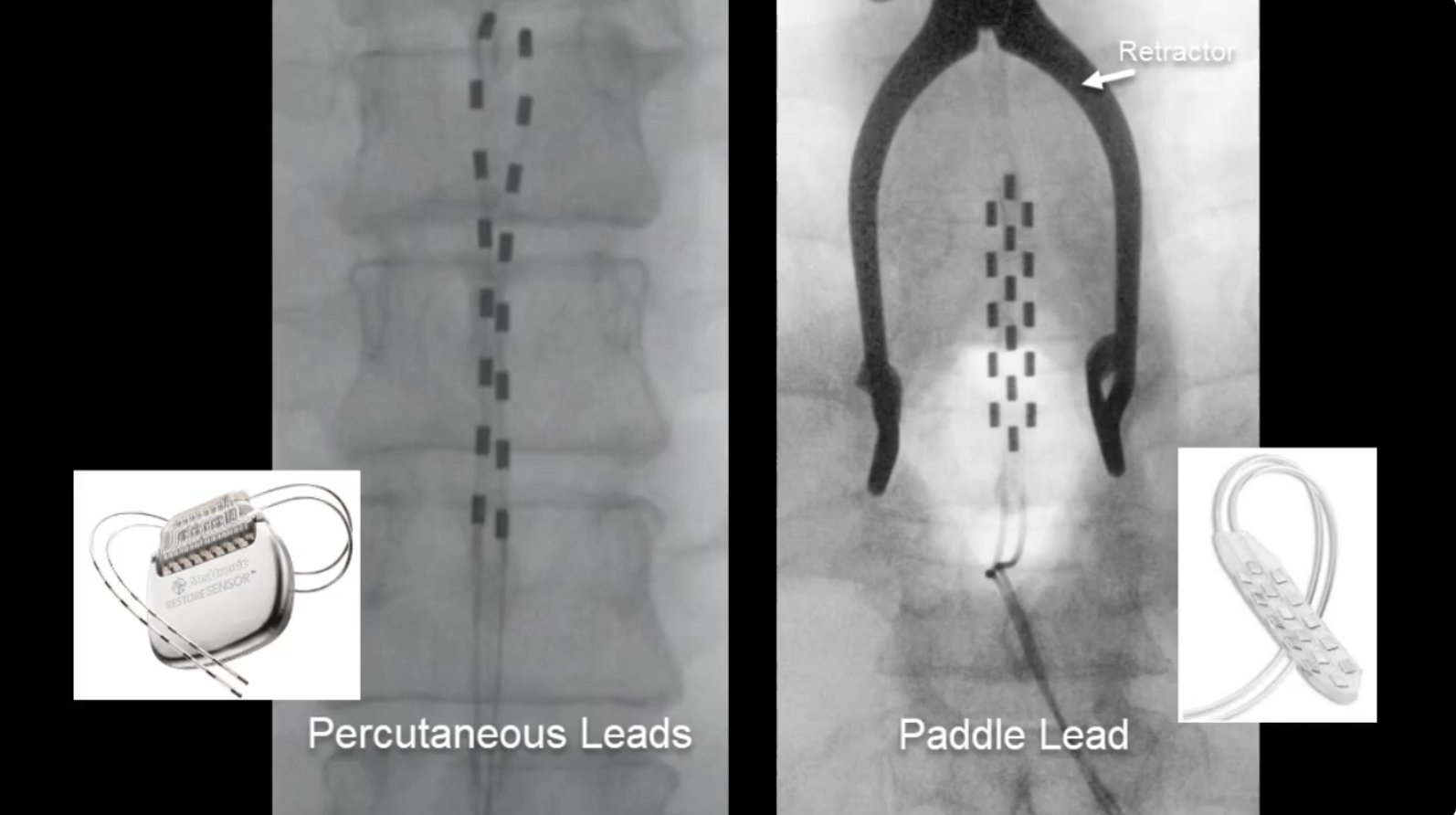
Percutaneous Spinal Cord Stimulator
A spinal cord stimulator is an implantable device used to help manage chronic pain when other treatments have not provided adequate relief. Before a permanent stimulator is placed, patients complete a trial period to ensure the therapy is effective. One of the major advantages of spinal cord stimulation is that it is reversible and does not permanently alter the anatomy of the spine.
-
A spinal cord stimulator works by delivering mild electrical signals to the spinal cord, helping interrupt pain signals before they reach the brain.
Before surgery:
Patients complete a successful stimulator trial with their pain management specialist
The results of the trial help determine whether a permanent system is appropriate
Your surgeon reviews your history and imaging to confirm the device is a good option
Spinal cord stimulation can be very effective for carefully selected patients, but it is not ideal for every pain condition. Conditions such as significant spinal stenosis, spinal imbalance, or SI joint dysfunction may require other treatments as well.
-
The procedure is performed under general anesthesia and typically takes about one hour.
During surgery:
You are positioned on your stomach
Small leads are placed into the epidural space around the spinal cord using X-ray guidance
The leads are advanced to the location where the best pain relief was achieved during the trial
A battery is placed under the skin, typically in the flank area between the ribs and hip
The leads are connected to the battery and secured in place
The incisions are closed and covered
The procedure is performed on an outpatient basis, and most patients return home the same day.
-
Day of Surgery
Most patients go home the same day
Walking is encouraged
First 1-2 Weeks
Focus on incision healing
Avoid submerging the incisions underwater
Showering is allowed
Gradually increase activity as tolerated
1-2 Weeks After Surgery
The stimulator is typically activated and programmed by the device representative
Adjustments can be made to optimize pain relief
1 Month
Follow-up appointment to assess healing and device performance
Recovery is generally focused on allowing the incisions to heal while gradually returning to normal activities.
-
The goal of spinal cord stimulation is to reduce chronic pain and improve quality of life.
Potential benefits include:
Reduced pain levels
Improved daily function
Increased activity tolerance
Reduced reliance on pain medications
A customizable treatment that can be adjusted over time
Because patients complete a trial before implantation, most have a good understanding of the relief they can expect from the permanent system.
-
Every procedure carries risks, though serious complications are uncommon.
Most Common Risks
Wound healing problems
Infection around the implant
If an infection develops around the device, removal of the stimulator may be necessary.
Other Risks
Spinal fluid leak
Headaches related to spinal fluid leakage
Lead migration
Lead fracture
Battery or device malfunction
Need for future programming adjustments or revisions
While spinal cord stimulators are highly reliable, they are implanted devices and occasional hardware-related issues can occur.
ADDITIONAL RESOURCES
-
![]()
Comparing Spinal Cord Stimulators
Dr. John Edwards compares the placement of percutaneous and paddle spinal cord stimulator leads, explaining the differences and benefits of each approach for pain management.